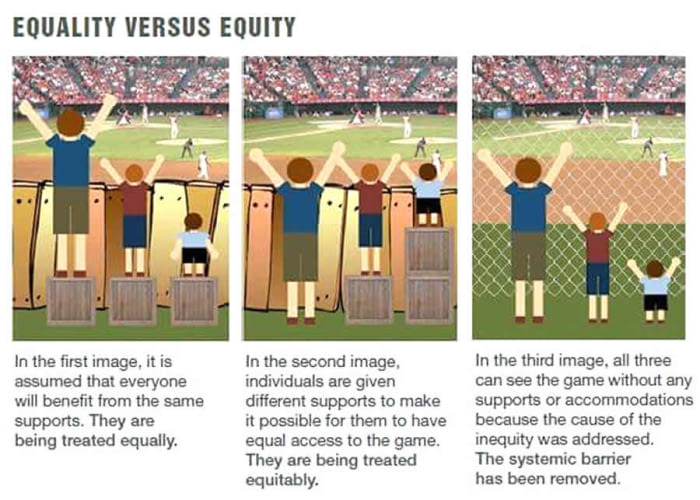
Equality between men and women exists when both sexes are able to share equally in: the distribution of power and influence; opportunities for financial independence through work or setting up businesses; access to education and the opportunity to develop personal ambitions, interests, and talents; responsibility for the home and children; and are completely free from coercion, intimidation, and gender-based violence both at work and at home.
Gender equality means that women and men, and girls and boys, enjoy the same rights, resources, opportunities, and protections. It does not require that girls and boys, or women and men, be the same, or that they be treated exactly alike. While people often associate gender equality primarily with women, as they are frequently more discriminated against or excluded from decision-making and access to social and economic resources, promoting the empowerment of women remains a key focus.
However, gender equality issues can also affect men. For example, in the power sector, male employees may encounter the perception that certain non-technical roles, such as administrative positions, are primarily for women. Additionally, men who wish to play an active caregiving role at home with their children may face negative views or cultural resistance.